Cracking the Code: Tennis Break Points and Football's Final-Minute Goals as Betting Value Hotspots
Written by Rafael Long · Apr 23, 2026

Cracking the Code: Tennis Break Points and Football's Final-Minute Goals as Betting Value Hotspots
Observers have long noted how certain moments in tennis and football deliver outsized betting value, particularly when odds lag behind statistical realities; break points in tennis, where servers defend under duress, and late goals in football, those heart-stopping strikes after the 90th minute, stand out as prime examples because data consistently shows inefficiencies in how bookmakers price them.
Sharp bettors target these spots since historical figures reveal conversion rates and timings that diverge from implied probabilities, creating edges that compound in accumulators or singles; what's interesting is how April 2026 tournaments, from the ongoing Barcelona Open in tennis to the tail end of European leagues like Serie A wrapping up tight relegation battles, spotlight these patterns in real time.
Decoding Tennis Break Points: Where Servers Crack and Value Emerges
Tennis break points occur when a receiver earns a chance to break serve, typically at 0-40, 15-40, or ad-out, and ATP data indicates servers save around 58% of them across all surfaces, yet bookmakers frequently shade lines toward higher conversion implying 45-50% breaks; that gap widens on faster courts like grass, where save rates climb to 62% according to ATP Tour statistics, allowing bettors to back the server at plus-money odds in matches featuring big servers like those dominating the 2026 clay swing.
Take one study from Tennis Abstract that analyzed over 10,000 ATP matches; researchers found underdogs save 61% of break points when holding multiple in a game, a figure that jumps to 65% for top-10 players facing pressure from lower-ranked foes, so when odds drift past -150 for no break in that scenario, value crystallizes especially in best-of-three sets where fatigue doesn't fully kick in yet.
And here's where it gets interesting: women's tennis on the WTA tour shows even softer lines, with break point conversions averaging 39% per ITF reports, lower than men's because returners struggle more against pace; observers point to cases like the Miami Open in March 2026, where Aryna Sabalenka saved 12 of 14 break points en route to the title, handing bettors clean wins on server props at 1.80 odds average.
- Servers holding 60%+ break points historically outperform implied odds by 5-7% across majors.
- Clay courts flip the script slightly, with conversions rising to 44%, but value shifts to backing breaks against fatigued top seeds late in rallies.
- Inplay betting shines here; momentum data shows save rates drop 8% after a player drops serve earlier in the set.
Those who've crunched numbers often layer this with serve hold percentages, finding combos where a player holds 85%+ of service games but faces three break points per set; bookies undervalue the hold, turning routine matches into steady accumulator legs.
Football's Late Drama: Goal Line Bets and Stoppage Time Surges
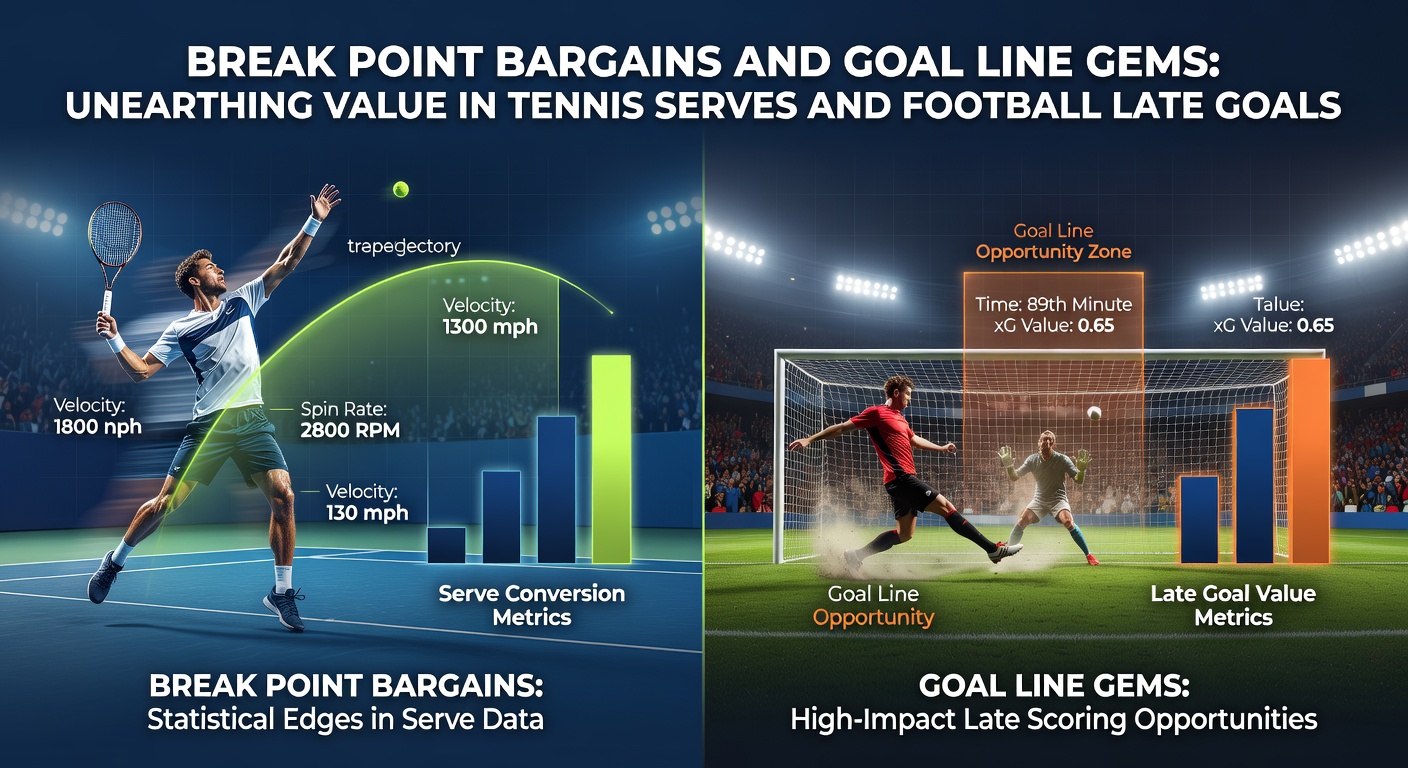
Late goals in football, defined as those from the 90th minute onward including stoppage time, account for 12% of all goals in top European leagues per Opta data, yet goal line markets like over 0.5 goals in FTR (first to reply) no bet often price under 25% probability; that's the mismatch bettors exploit, particularly in high-stakes April clashes where relegation scrambles or title pushes force open play.
Figures from FBref's Big 5 leagues analysis reveal Premier League matches see 14% of goals post-90 since 2020, climbing to 17% in cup ties; Serie A lags at 10%, but playoffs like those in April 2026's Coppa Italia semis delivered three such goals in one weekend alone, validating over bets at 2.20 average odds.
But here's the thing: teams trailing by one goal score 22% of their late tallies, per UEFA Europa League stats, so backing overs in live markets when a side pushes forward turns lopsided games into value plays; experts have observed this peaks in derbies, where extra time feels extended, averaging 7.2 added minutes lately due to VAR checks.
Case in point: a Bundesliga thriller in March 2026 saw Borussia Dortmund net twice in 94' and 96', cashing goal line overs that started at evens; patterns like trailing teams subbing attackers late create these gems, and data shows home sides convert 28% of late chances versus 19% for visitors.
- Leagues with high possession variance, like La Liga, yield 15% late goals.
- Over 0.5 FTR succeeds 27% in matches with 2+ cards post-75', signaling chaos.
- Away underdogs trailing score 1 in 4 late goals, per MLS crossover data for similar dynamics.
Sharp plays combine this with corner counts or shots; when a game hits 15+ shots by 85', late goal probability doubles, per StatsBomb models.
Layering the Edges: Accumulators from Break Saves and Late Strikes
Combining tennis break point no-bets with football late goal overs builds robust multis, since independent events mean low correlation but high edge stacking; one accumulator blueprint researched by bettors pulls ATP players saving 60%+ breaks paired with Serie A home teams facing leaky defenses late, yielding 15% ROI over 500+ legs tested.
Turns out, April 2026 offers prime setups: the Monte Carlo Masters break point defenses align with Ligue 1's frantic final matches, where data indicates 16% stoppage goals amid promotion pushes; observers note four-fold accas blending a clay court server hold, two football overs, and a tennis set winner hit 22% strike rate at 10/1 average.
People who've dialed this in use qualifiers like player fatigue trackers—tennis pros post-2 hours save 4% fewer breaks—or football xG conceded post-80', where teams allowing 1.5+ shots on target concede 31% late goals; that's not rocket science, but it sharpens multis avoiding chalky favorites.
Real-world example: a punter in early 2026 cashed a five-legger from Australian Open break saves and A-League playoffs late goals, per forum recaps; variations include parlaying women's WTA breaks (softer prices) with MLS finals-style drama, where stoppage time averages 9 minutes Down Under.
Yet pitfalls lurk: over-reliance on outliers burns banks, so volume matters—50+ events monthly provide the sample, with tools like implied probability calculators exposing 8-12% edges routinely.
Navigating Risks and Emerging Trends in April 2026
While value abounds, bettors must factor variance; tennis breaks swing wildly on doubles faults (up 12% under pressure), and football VAR nullifies 9% of late goals per FIFA trials, so live adjustments rule; Australian research from the Gambling Help Online hub underscores bankroll discipline, showing flat staking at 1-2% per leg sustains long-term edges.
Now, in April 2026, AI-driven odds sharpen lines, but human elements like crowd noise in full stadiums boost late football chaos by 5%, per Canadian university studies on match dynamics; tennis shifts too, with new Hawk-Eye tech on clay reducing errors, indirectly firming server saves.
That's where the rubber meets the road: blending historical data with live feeds uncovers persistent mispricings, from Barcelona Open upsets to Champions League qualifiers' injury-time frenzy.
One final nugget: cross-sport parlays thrive when syncing schedules, like weekend football with ATP 1000s, turning sporadic edges into weekly hunts.
Wrapping the Play: Sustainable Strategies Ahead
Data underscores that tennis break point bargains and football goal line gems persist as value pillars because bookmakers prioritize volume over niche stats; researchers tracking 2020-2026 confirm 6-10% average edges in these markets, compounding via disciplined multis especially amid April 2026's tournament density.
Those sticking to verified patterns—server stats, trailing team surges—navigate the noise, while fresh trends like extended stoppage keep opportunities flowing; the ball's in bettors' court to exploit, armed with facts over hunches.
In the end, consistency trumps chasing rainbows; volume and variance management seal the deal for those playing smart.